Climate change operates on a timescale we’re not good at planning for. Four-year policy platforms and investment focused on short-term gains are ill equipped to tackle it.
So what tools are available to help formulate responses, stress test strategies, and model the apocalyptic outcomes of failure?

In February, I’m giving a guest lecture at the University of Oxford’s Department for Continuing Education that explores how science fiction games and graphic narratives tackle these questions. While hard science and concrete action are the building blocks of any response, graphic media offer new ways of thinking through the defining challenge of this century.
The lecture will cover game design, world building, and graphic / environmental storytelling. Case studies include everything from strategy games (Terra Nil and Frostpunk 2) and board games (Daybreak) to triple-A titles (Horizon Zero Dawn), indie darlings (Stray), and graphic novels (Here and Simple Life).

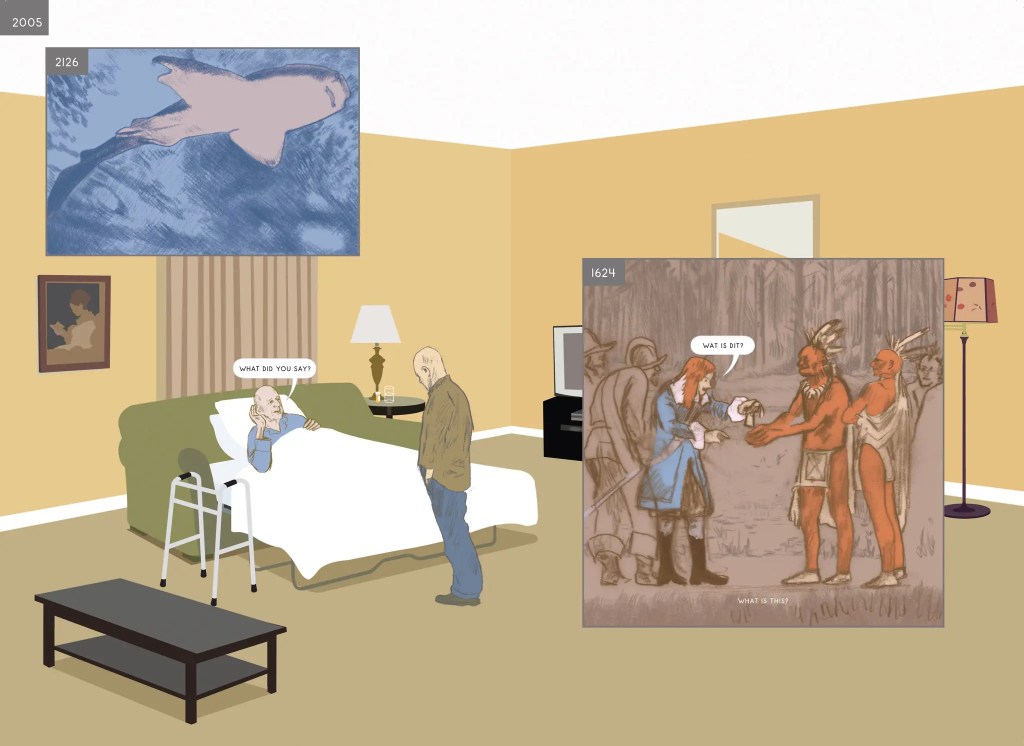
My hope is there’s something in there for everyone. Daybreak (2023) is a collaborative board game like Pandemic (they share a co-creator). As with any complex game, it takes a bit of rule-reading and working through. But it perfectly captures the give and take of international co-operation on climate. I was lucky enough to playtest a card version of the game with the help of creator Matteo Menapace—he’s great. Meanwhile, Here (2014) is a stunning graphic novel that represents change over time in a way that’s unique to the medium.
Games and graphic novels don’t always get it right. Some fall into simplistic celebrations of “green growth”, while others suffer from inconsistencies between story and gameplay. But they ask—and sometimes answer—important questions.
The lecture is part of a day course on February 1st that spans film, literature, and gaming. It’s still open for registrations if you’d like to attend.
 gabriel burrow