Created in 2015, Discord started out as a solution for gamers wanting reliable group communication. People would “hop on voice chat (VC)” and talk to their friends while playing online. Crucially, it wasn’t bound to a single game—you could talk to your mates even if you were doing something different. And the flexibility of different “channels” meant people could easily drop in and out of conversations.
Today, Discord has grown into a global community platform. It still specialises in games and experiences, but the scope is far broader. It’s become a place where you can interact with like-minded people, share ideas, source feedback, offer exclusive perks, and even run ads. Content creators, brands, and organisations of all shapes and sizes are now taking advantage of this functionality.
Here are the key considerations if you’re thinking about taking the leap.
Who uses Discord?
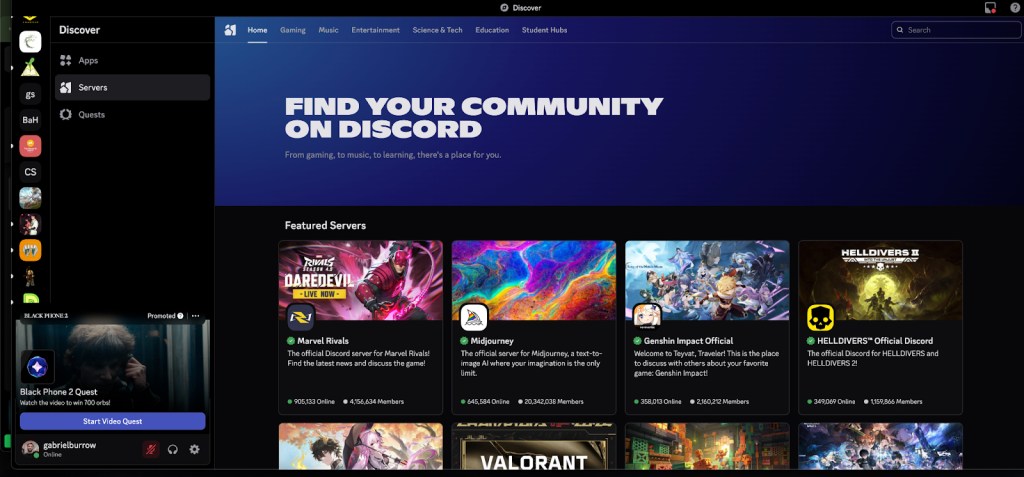
Functionally, Discord is similar to platforms like Zoom, Microsoft Teams, or Slack. But rather than targeting the workplace, it’s oriented towards hobby groups and social communities. People get together for listening and viewing parties, to run book groups, or host online events.
Loads of people use Discord—200 million of them every month. Each day, more than 4 billion messages are sent and people talk for 4 billion minutes. More than half (53.43%) of users are aged 25-34, with the rest split between younger Gen Z users, older millennials, and a smattering of Gen X.

In recent years, the platform’s user base has diversified considerably. While it still skews male (66.3%), the gender divide is shrinking over time. What’s more, there are indications that older users are gravitating towards the platform.
Podcasts such as The Rest is Politics offer access to an exclusive Discord server as part of their paid memberships. Notably, it’s often presented as a “chatroom” or “chat community” in these contexts to engage majority millennial and Gen X audiences.
How does Discord work?
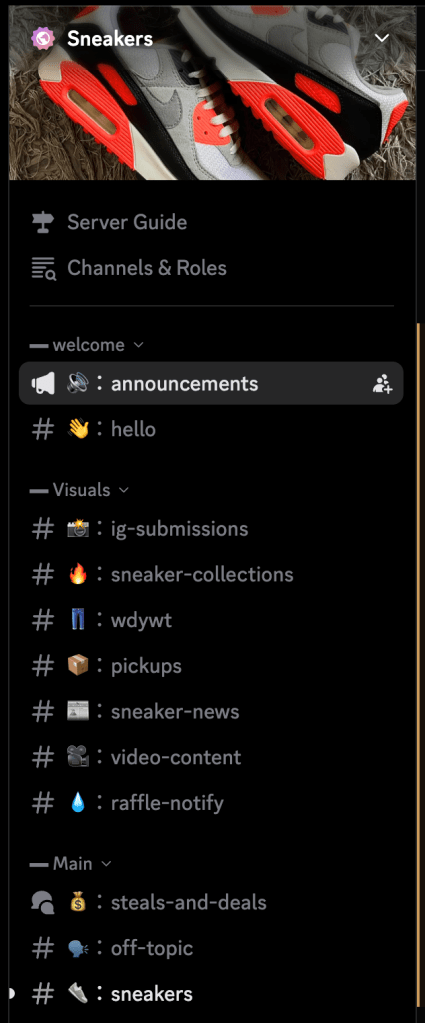
Fundamentally, Discord is designed for two-way communication. It’s a place you and your community can share stuff. What gets shared where depends on the structure of the server. Generally, they’re split into different channels designated for specific kinds of content. It’s easiest if I show you an example…
This is a server for “sneakerheads”, or “people who like trainers” as we say in Britain. It’s a great example of Discord-based design because it covers a range of content dictated by the shared interests of the community.
There are channels where admins can share introductions, rules, and announcements. Those channels are solely used to communicate important information, so users can’t reply.
Then there are dedicated channels for different kinds of content and subject matter. People can share photos or videos of what they’re wearing, discuss news, buy, sell, swap, and ask fellow sneakerheads whether their shoes are fake.
There are also voice channels and bots that play music—kind of like a dedicated radio station that the community can tune into and request songs.
These same principles apply to any kind of server. You create spaces oriented around particular subject matter or kinds of interaction, and invite people in.
Build hype, gather feedback
One of the most effective uses of Discord is building hype for projects and products that haven’t launched yet. Access to an exclusive Discord server is a typical perk of backing something on Kickstarter, for example. Backers might have to wait years for the finished product to be ready, but in the meantime they can talk to the community that’s growing around it.
The same principle applies across any industry. Designing a new model of car? Working on a new crypto project? Dropping a fashion collaboration? Cooking up a new vegan food brand? Crowdfunding a film? Document the development process and take people with you on the journey. The result will be a “stickier” audience that will buy into your vision.
Better yet, they can help you shape it. Discord is a great place to get feedback from an engaged community that really cares about your industry. You can source everything from design input to commercial insights, and in the process make people feel like they’re co-creating the project with you. There’s also scope for more tailored forms of personalisation depending on the product you’re offering. This is as simple as creating a community channel and sharing a poll.
Let’s look at another example. Hopetown, a role-playing game in development, invites its Kickstarter and Indiegogo backers to join a Discord server. On it, people can share suggestions, pictures of their pets, and fan art. Notably, they also respond to polls about what consoles they want to play the game on, what mechanics they’re most interested in, and more. This is invaluable information, shared by the developer’s core audience.

Drive engagement with Quests
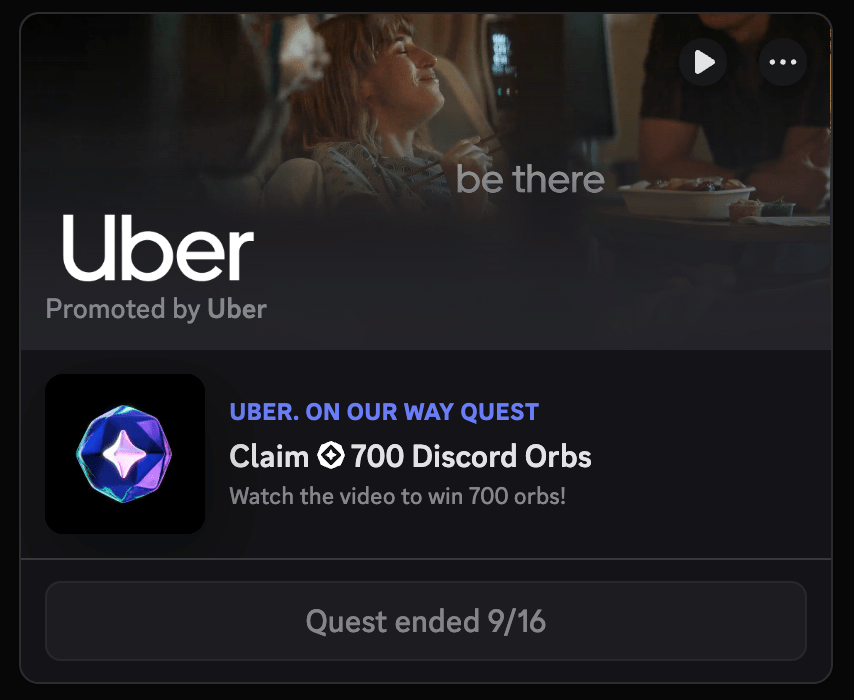
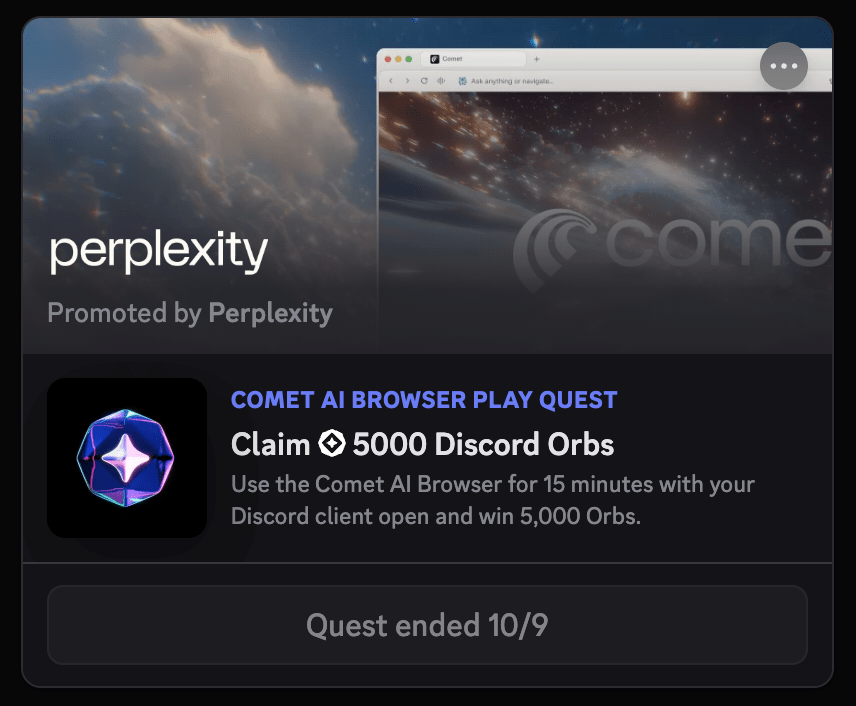
Increasingly, Discord has commercialised its platform by offering advertisers ways to engage its communities. In typical discord fashion, this has a gamified flavour. Users can complete “Quests”, which can be as simple as watching a video or as complex as using an online service or playing a game for at least 15 minutes.

In exchange for completing these Quests, users are rewarded with Discord Orbs – the more complex the task, the more they’re rewarded with. The Orbs can then be redeemed on Discord’s store for profile cosmetics and credits for its boosted “Nitro” functionality (HD video streaming, themes, and more). Notably, Nitro boosts can be applied to a whole server, so people help their wider community when they use them.
For Discord to be a viable advertising platform, you need a target audience that’s receptive to these gamified elements. Winning orbs isn’t going to appeal to everyone. But plenty of people would rather choose to watch a minute-long ad in exchange for a reward than waiting to click “Skip” on a YouTube ad they have no interest in. A variety of brands are already using “Quests”, including Uber and Perplexity. Maybe you’ll be next.
This blog was originally published at teamlewis.com, where I work as Research Lead.
 gabriel burrow